[
BLOG
]

When we started developing the promotional video for A Night To Remember III, the main challenge was avoiding something that felt like a traditional event advert.
The event already had plenty to talk about. The first two evenings had sold out, more than £200,000 had been raised for charity, major names from football and boxing had taken part, and the third event would return to Grosvenor House Hotel in London.
We could have placed Graham Stack in front of a camera and asked him to explain all of that directly. It would have communicated the information, but it would not have reflected the personality, energy or ambition behind the event.
The video needed to show the scale of A Night To Remember III without immediately feeling like it was trying to sell something.
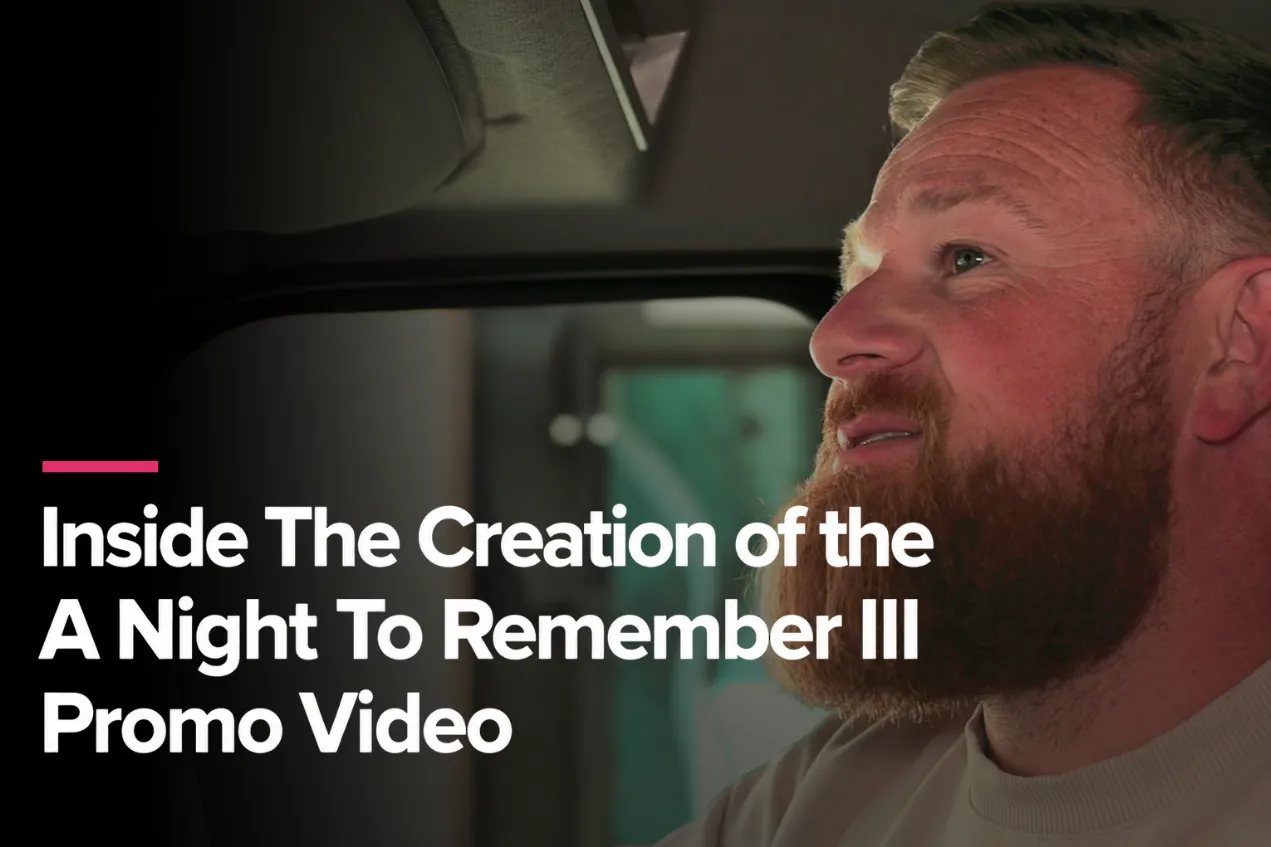
I took the lead on the direction, developing a concept built around a casual conversation between Graham Stack and Ginger Cabbie inside a London black cab. The project brought together creative development, scripting, direction, filming and post production, reflecting the joined up approach behind our content creation service.
What begins as an ordinary journey gradually becomes a fast paced introduction to the event, its history and what guests can expect from the third instalment.
Starting with a familiar London setting
The video opens quietly.
Ginger Cabbie checks his rearview mirror. We see the taxi light outside before Graham Stack enters the cab and asks to be taken to Grosvenor House Hotel.
Ginger Cabbie recognises him and asks why he is not taking the team bus.
The line is a deliberate callback to a story from Graham’s time at Arsenal, when he ended up driving the Arsenal team bus.
It gives the opening exchange an authentic football reference and creates an immediate connection between Graham and Ginger Cabbie.
Viewers familiar with the story understand the joke straight away, while anyone hearing it for the first time can still appreciate the suggestion that Graham should be driving the team rather than sitting in the back of a taxi.
That opening establishes the relationship and tone immediately. Their exchange feels informed, familiar and natural, rather than like two people meeting solely for a promotional video.
Graham explains that he is in London for meetings ahead of his third charity event. From there, Ginger Cabbie begins asking the questions that a potential guest might naturally ask.
How did the previous events go?
How much money has been raised?
Who attends?
What actually happens during the evening?
Instead of Graham addressing the audience, the information is revealed through conversation. Ginger Cabbie becomes a proxy for the viewer, allowing the promotional points to emerge naturally.
Turning an accidental conversation into the pitch
The core idea was to frame the video as an accidental interview.
The audience is not being presented with a list of event features. They are listening to Graham Stack and Ginger Cabbie talking during a taxi journey.
Using a black cab gave the video an immediate connection to London and the return of A Night To Remember to Grosvenor House Hotel. It felt familiar, recognisable and relevant to the location without relying on predictable shots of landmarks.
Ginger Cabbie was a natural fit for the concept. His personality, football knowledge and dry delivery helped make the conversation feel genuine rather than heavily scripted.
The rearview mirror became an important visual throughout the conversation. Repeated shots of Ginger Cabbie’s eyes and Graham’s reflection make the viewer feel as though they are sitting inside the cab, quietly listening to the discussion.
Those small looks and reactions also helped us control the comedy. The humour does not come from delivering obvious jokes to camera. It comes from timing, recognition and the understated exchange between the two characters.
Taking inspiration from Edgar Wright
Edgar Wright was one of the main creative references for the direction and editing.
The aim was not to copy a particular film or sequence. It was to draw from the way he uses visual rhythm, fast inserts, precise timing and sharp changes in energy to move a story forward.
The taxi scenes are deliberately restrained. The camera observes the conversation, holds on reactions and gives the dialogue space.
As soon as Graham mentions the events, the visual style changes.
His description of the first sold out event cuts into footage of the chandelier lit ballroom at Grosvenor House Hotel, the boxing ring, the crowd and the scale of the production.
When Liverpool is mentioned, the edit moves into intense fight footage, celebrations and victorious boxers.
When the conversation turns to fundraising, we see oversized charity cheques and the organisations that have benefited from the first two events.
Each claim is immediately supported by an image.
That relationship between dialogue and imagery was central to the idea. Graham does not simply tell Ginger Cabbie that the events are successful. The viewer sees the proof before the conversation has time to slow down.
Creating contrast through the edit
The contrast between the taxi and the event footage gives the promo much of its energy.
Inside the cab, the imagery is natural and slightly muted. The setting feels calm, contained and everyday.
The event footage is the opposite.
It is filled with dramatic lighting, deep blacks, bright screens, live performances, black tie guests, boxing action and crowded rooms.
Moving between those two visual worlds allows the video to repeatedly reset its rhythm. The viewer returns to the calm of the taxi before being thrown back into the spectacle of the event.
As Graham begins listing everything the evening includes, the cuts become faster.
Businesses networking.
Guests celebrating.
Live entertainment.
Football and boxing figures appearing on stage.
Fighters walking towards the ring.
Crowds cheering around the ballroom.
The frequency of the cuts increases as the conversation progresses, creating a sense that the event is becoming bigger with every answer.
This part of the production relied on careful footage selection, sound design, colour grading and edit timing. Those decisions are central to our videography service, where the finished film is shaped around how an audience should feel, not simply around the footage captured on the day.
Showing the scale of the event
One of the main purposes of the promo was to demonstrate how much A Night To Remember had already achieved.
When Graham mentions that the first event in London sold out, the video cuts to the packed ballroom at Grosvenor House Hotel.
When he explains that Liverpool also sold out, we see the fights, the crowd and the celebrations from the second event.
The footage allows the audience to experience the atmosphere rather than simply hearing about it.
The same approach is used when Ginger Cabbie asks about the money raised.
Graham explains that more than £200,000 has already been raised for charity. The edit then cuts to the charity presentations, oversized cheques and organisations supported through the events.
It was important that every major statement was backed up visually. The audience should not just be told that the events are successful. They should be able to see the venues, the people and the impact for themselves.
Directing the performances
For the concept to work, the conversation needed to feel natural.
The dialogue had to communicate a large amount of information, but it could not sound like Graham and Ginger Cabbie were reading an event brochure to each other.
The performances were directed around timing rather than exaggerated delivery. Small pauses, looks into the mirror and understated reactions helped make the conversation feel more believable.
Ginger Cabbie asks simple questions and allows Graham to introduce the major selling points of the event without forcing them into the script.
His established personality also added something that would have been difficult to create with a conventional presenter. The humour feels natural because it comes from Ginger Cabbie’s reactions, delivery and relationship with Graham.
The final exchange was especially important.
Ginger Cabbie asks whether London will turn up for the third event. Graham says it will, before asking whether Ginger Cabbie will be there.
“Depends if the meter is on.”
It gives the scene a natural ending and releases the tension created by the increasingly fast event montage.
They share a laugh, the conversation finishes, and the video can move into the direct promotional message.
Building the promotional arc
The rhythm of the video gradually accelerates from beginning to end.
It starts slowly, giving the audience time to understand the setting and the relationship between the characters.
As Graham begins discussing the previous events, the edit introduces more footage, faster cuts and stronger sound design.
The scale continues to grow as the conversation moves through the sold out venues, the charity fundraising, the live broadcasts on TalkSport Boxing and Sports.com, the businesses attending, the entertainment and the sporting names involved.
By the time the video reaches its final montage, the quiet taxi journey has transformed into a fast moving overview of everything the event represents.
Bringing the audience back into the calm of the cab for the final joke provides a moment of relief before the booking message appears.
The edit was also planned with wider campaign use in mind. Key moments, reactions and montage sections could support social promotion beyond the main film, giving the campaign adaptable assets suited to our approach to short form content.
Moving from story to advertisement
Until the final moments, the video operates more like a short scene than an advert.
The closing graphics are where that changes.
The cab conversation cuts into a stylised London skyline featuring the A Night To Remember III identity. This is followed by the final booking screen, website information and sponsor logos.
By holding the direct call to action until the end, the promotional message feels earned.
The viewer has already seen the packed venues, the boxing, the entertainment, the fundraising and the atmosphere. The final graphic does not need to explain the event again. It only needs to tell them what to do next.
Making a promo people choose to watch
The most important creative decision was giving the video a reason to exist beyond announcing another event.
A Night To Remember is built around personalities, football stories, competition, charity and entertainment. The promotion needed to contain some of that same character.
Pairing Graham Stack with Ginger Cabbie allowed us to communicate the event’s achievements through a conversation that felt recognisable, entertaining and connected to football culture.
The team bus reference gives the opening an authentic story.
The black cab provides a recognisable London setting.
Ginger Cabbie gives the concept personality and humour.
The rearview mirror creates a consistent visual motif.
The event footage provides the scale and spectacle.
The Edgar Wright inspired pacing allows the video to move between story, comedy and promotion without losing clarity.
The final result feels like a scene first and an advert second, while still clearly presenting everything that makes A Night To Remember III worth attending.
That balance was the objective from the beginning.
You can find the full event details, table information and booking options on the A Night To Remember III event page.
[
GET INFORMED
]
Our blog is a hub for insights, tips, and industry trends in digital marketing and social media.