[
BLOG
]
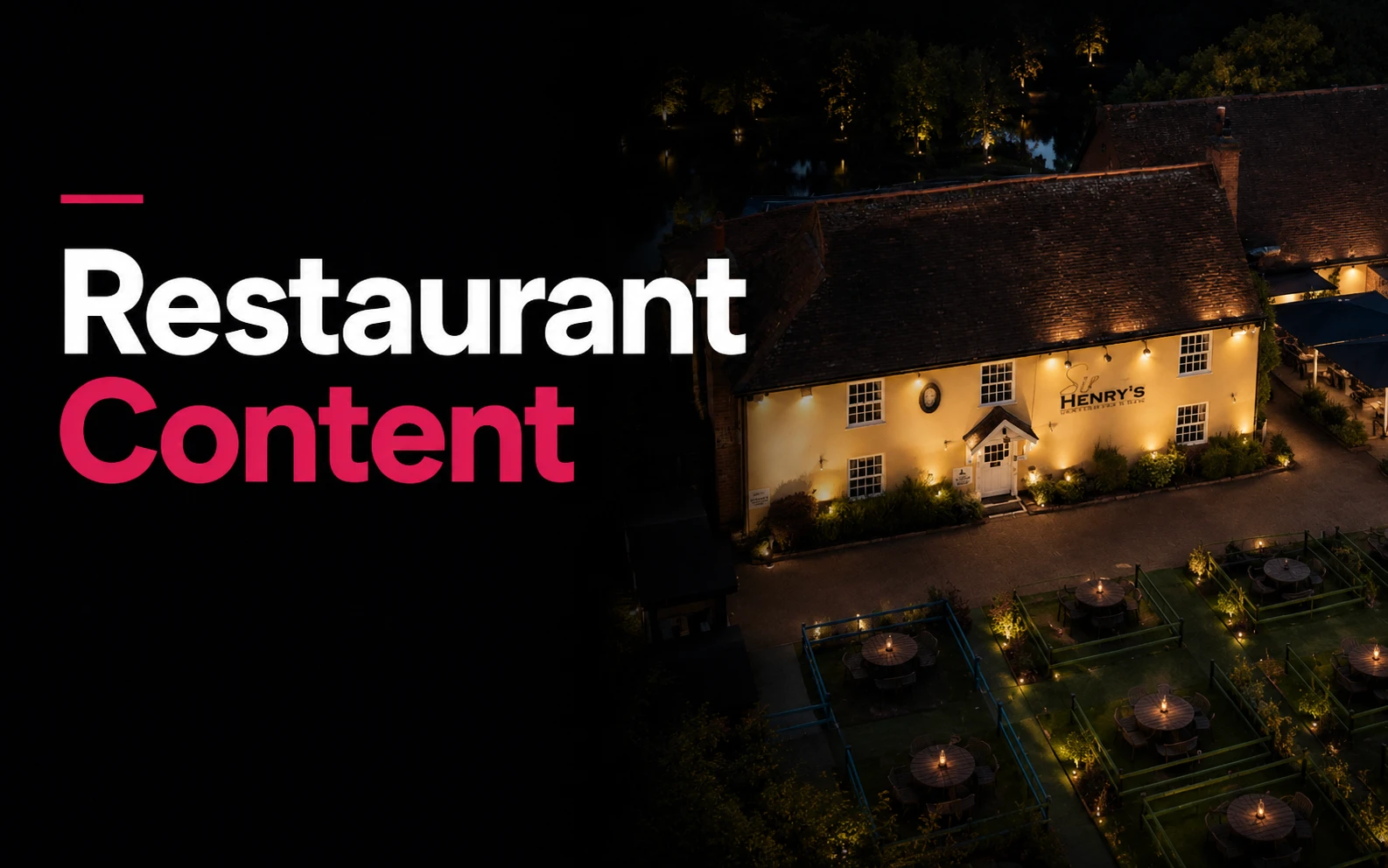

Restaurant marketing that focuses on food photography alone misses the most important thing people are actually choosing when they book a table. They are not just choosing a meal. They are choosing an evening, an atmosphere, a feeling, a memory. The food is a central part of that, but it is rarely the whole reason someone picks one restaurant over another when price and location are broadly comparable. People choose restaurants because of how they imagine they will feel when they are there, and most restaurant content never attempts to create that feeling.
The useful detail here is not simply producing more content. It is planning assets around the questions, moments and channels they need to support. That is how we approach our content creation service, and it is visible in our work with Aria's Bistro.
This matters commercially because the restaurants that fill covers consistently, that drive advance bookings rather than relying on walk ins, that generate the kind of word of mouth and social sharing that reduces their dependence on advertising spend, are almost always the ones that have built a strong sense of what their dining experience feels like before the customer arrives. The content, the photography, the website copy, the social media presence: these either create that anticipation or they do not. And for most restaurants, they do not, because the content is focused on what is on the plate rather than on what it is like to be in the room.
What People Are Actually Imagining When They Choose a Restaurant
When someone is deciding where to take a partner for a significant anniversary dinner, they are imagining the evening. The lighting. Whether the room will feel intimate or busy. Whether the staff will make them feel looked after or process them efficiently. Whether the wine list will feel considered. Whether there will be a sense of occasion. None of this is captured in a photograph of a perfectly plated dish, however beautiful the dish is.
We have worked with Sir Henry's since 2010. Their social content is produced specifically for the platform, planned around the restaurant calendar, shot to feel current, and created to do the job of making people want to visit rather than just keeping the feed moving.
The same applies across different dining occasions. A group booking for a birthday wants to know whether the room can accommodate a large table without feeling like they are being put in a corner. A business lunch booking wants to know whether the noise level allows conversation and whether the pacing of service will fit a ninety minute window. A family with young children wants to know whether they will feel welcome or like an imposition. These are the questions people are trying to answer when they look at a restaurant's content, and most restaurant websites and social media accounts do not answer them at all.
Content that sells the experience answers these questions without being asked. It shows the room full of people who are visibly having a good time. It shows the interaction between staff and guests. It captures the texture of the environment: the light at different times of evening, the sound suggested by a busy but not overwhelming room, the detail of the table setting. These elements communicate experience in a way that food photography, however skilfully executed, simply cannot.
The Specific Content That Drives Bookings
Atmosphere photography and video, showing the restaurant occupied and alive rather than empty and perfectly set, consistently outperforms food only content in driving booking intent. An empty restaurant with beautiful table settings looks like a catalogue. A restaurant full of people enjoying themselves looks like somewhere worth going. The most effective content tends to be taken during actual service, capturing real atmosphere rather than a staged version of it.
Short video content that takes potential guests into the experience, following a dish from kitchen to table, capturing the energy of a Friday evening service, showing the perspective of a guest arriving and being welcomed, creates a form of anticipation that static photography cannot match. When someone can visualise the experience of being in your restaurant, the decision to book becomes emotionally easier even before they have looked at the menu or the price point.
Testimonials and reviews used in marketing should prioritise the ones that describe the experience rather than simply rating the food. A customer who writes "the food was excellent" has given you a data point. A customer who writes "we went for our anniversary and the staff had remembered a note we made when booking, the room felt perfect for the occasion, and we have already booked again for next year" has given you a story that a prospective customer can imagine themselves in. Curating and featuring these experience focused reviews in your content and on your website is a form of social proof that carries significantly more booking generating power than aggregate star ratings.
Aligning Content With the Actual Experience
The content must accurately represent the experience you actually deliver. Restaurants that use beautiful professional photography to create an impression of an experience that does not match the reality create exactly the wrong expectation. A guest who arrives expecting intimate candlelit dining and finds a brightly lit canteen is a guest who is already disappointed before the food arrives, and that disappointment colours the entire evening and the review that follows.
The most sustainable restaurant content strategy is to identify what your experience genuinely is at its best, what the distinct character of your restaurant is that is different from every other restaurant in your area, and to find ways to communicate that truthfully and compellingly across every touchpoint. This is not a marketing exercise separate from operations. It requires the kitchen, the front of house and the marketing function to share a clear understanding of what the restaurant is trying to be, and for the content to reflect that reality rather than an aspirational version of it.
Restaurants that get this right build something that most advertising cannot buy: a clearly defined reputation for a specific type of experience, communicated consistently enough that potential guests understand exactly what to expect before they arrive. That clarity drives the right bookings, from guests who are already predisposed to enjoy what you offer, which produces better reviews, more word of mouth and more consistent covers. If you want to see how this approach translates into practice across different hospitality contexts, the work completed for Aria's Bistro demonstrates how content strategy and brand work together to build a distinctive restaurant identity.
Content for restaurants needs to feel as good as the food looks. Our content creation service covers the full range for hospitality businesses, see recent work with Aria's Bistro and Saints Restaurant.
If you need a stronger content library, start with our content creation service and photography service. Relevant examples include our work with Aria's Bistro and Saints Restaurant.
[
GET INFORMED
]
Our blog is a hub for insights, tips, and industry trends in digital marketing and social media.