[
BLOG
]
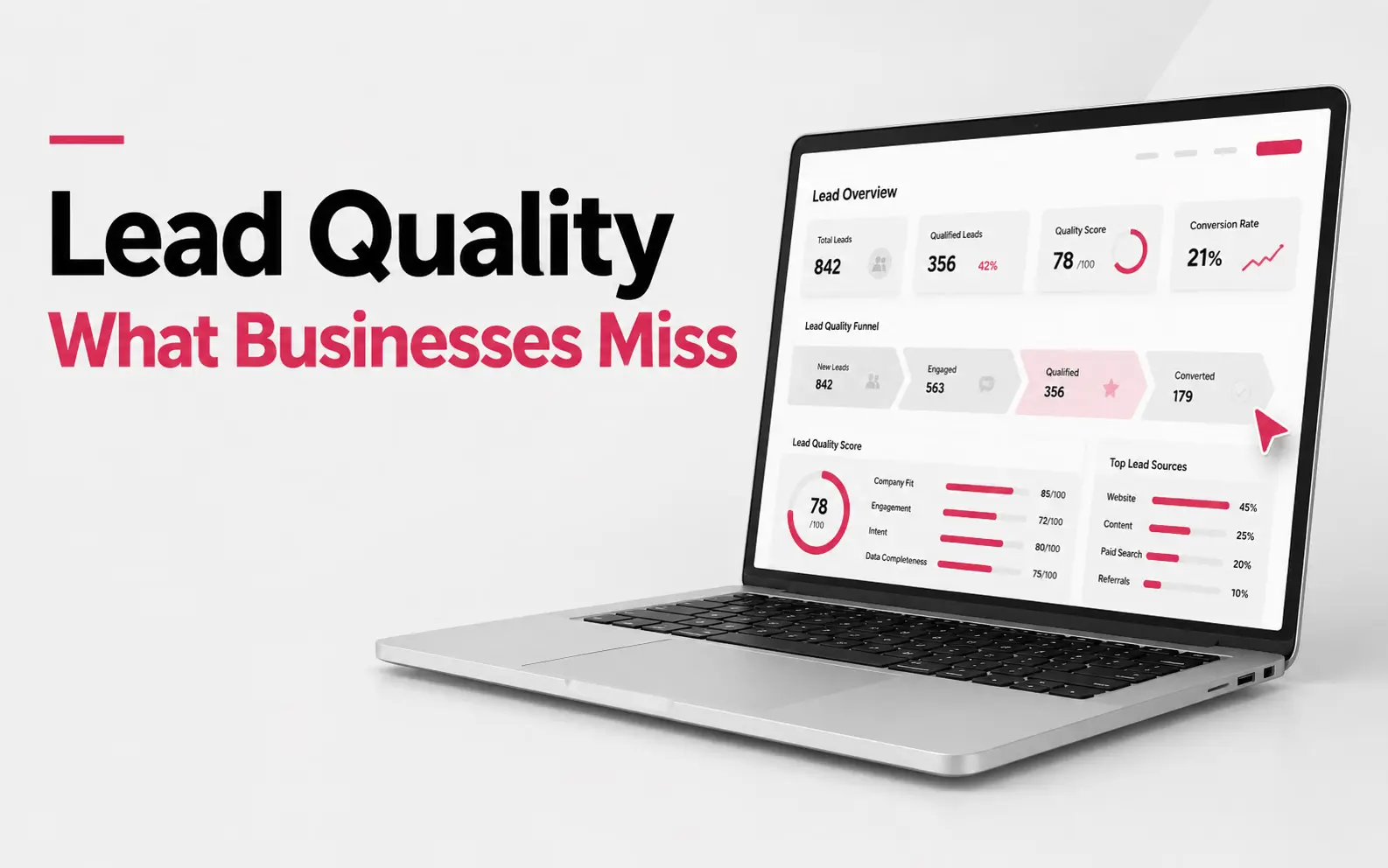

Most businesses that run marketing campaigns measure their success by volume: how many leads came in this month, how many enquiries were generated, how many clicks arrived at the contact form. These numbers are tracked, reported and used to evaluate whether the marketing is working. The problem is that lead volume, without any measure of lead quality, tells you almost nothing about whether your marketing investment is actually producing value for the business.
The useful detail here is that campaign performance is rarely caused by one setting inside an ad account. The offer, creative, landing page and follow up all shape the result. That is why our paid advertising service connects media buying with content and website decisions, as seen in our work with GPS Contractors.
A campaign that generates fifty enquiries, forty of which are from people who are not in your service area, cannot afford your fees, or have a problem you are not positioned to solve, is a campaign that has produced ten useful contacts at a very high effective cost. A campaign that generates fifteen enquiries, twelve of which turn into actual conversations with genuinely qualified prospects, is a campaign that has produced dramatically better results even though its headline lead volume is lower. If you are only measuring volume, you would evaluate the first campaign as a better investment, which is exactly the wrong conclusion.
Why Lead Quality Gets Ignored
Lead quality is harder to measure than lead volume. Volume is a number that appears automatically in your analytics or CRM. Quality requires someone to assess each lead against a defined set of criteria, track what happened to it through the sales process, and feed that information back into marketing decisions. This loop between sales and marketing is absent in many small and medium sized businesses, not because anyone has decided it is unimportant but because it requires a slightly more deliberate process than most businesses have established.
Take Pro Project Promotions as a real example. We ran Meta Ads for their boxing and charity events from scratch, and within the first campaign they saw an 8.4x return on ad spend and over 120 bookings. That comes from testing the creative properly before scaling the budget, not from guessing and hoping.
There is also a psychological dimension. High lead volume feels like success. It is easy to present to stakeholders, easy to celebrate internally, and easy to use to justify continued marketing spend. Low lead volume with high quality is harder to communicate and harder to feel good about, even when the actual business value generated is higher. The bias toward measuring what is easy to measure is natural but costly when it consistently leads to optimising for the wrong thing.
Advertising platforms compound this problem by optimising for the conversions you track. If you are tracking form submissions as conversions, the platform will optimise for form submissions. It does not know and cannot know whether those form submissions are from your ideal customer or from people who will never become viable prospects. The only way to tell the platform what a good conversion actually looks like, in terms that will influence how it optimises, is to feed quality signals back into the campaign, which requires the marketing to sales feedback loop that most businesses have not established.
Defining What a Good Lead Actually Looks Like
Before you can measure lead quality, you need a clear definition of what a good lead is for your business. This is not as straightforward as it sounds, because what makes a lead good varies by business and by growth stage. The most useful framework combines several dimensions: fit, intent and timing.
Fit refers to whether the prospect matches the characteristics of customers your business serves well and profitably. This includes obvious filters like geography, industry and company size where relevant, but also more qualitative signals: do they have the budget range your services require, do they have a problem you are genuinely positioned to solve, do they seem like a customer who will be straightforward to work with and likely to produce the kind of case study or testimonial that helps you win more business like theirs?
Intent refers to how clear and immediate their need is. A prospect who has a specific project in mind with a defined timeframe is higher intent than one who is gathering information for a decision that might happen in six to twelve months. Neither is worthless, but they require different responses and should be weighted differently in how you evaluate campaign performance. Timing, which overlaps with intent, refers to where in their decision process the prospect is and whether your marketing has caught them at a useful moment or too early to convert efficiently.
Improving Lead Quality Through Campaign Design
Once you have defined what a good lead looks like, you can make campaign decisions designed to attract more of them. Specificity in ad copy and creative is the most direct lever. Ads that speak precisely to a defined audience with a defined problem will be less appealing to people outside that definition, which reduces volume but improves quality. A solicitor running a generic "we handle all legal matters" campaign will attract a broader range of enquiries than one running "commercial lease negotiation for businesses opening their first premises." The second campaign produces fewer total enquiries and more of the right ones.
Landing pages that qualify as well as convert are another tool. Including pricing information, project size minimums, geographic scope, or other filters in your landing page content reduces the number of enquiries from people who are unlikely to be a fit, while ensuring that the people who do submit have self qualified against at least some of your criteria. This reduction in total leads can feel like the campaign is performing worse, but if it is accompanied by an increase in lead quality, it is almost certainly performing better from a business value perspective.
The feedback loop is the thing that makes improvement possible over time. Reviewing your leads regularly, categorising them by quality, and identifying which campaigns, which ad groups, which keywords or which audiences are producing the best quality contacts gives you the information to invest more in what is working and less in what is generating volume without value. This discipline, built into your marketing process as a standing routine rather than an occasional review, is what separates businesses that get progressively better at generating high quality leads from those that keep spending on campaigns that feel busy but never quite produce the business growth they are supposed to.
If your campaigns need clearer commercial results, start with our paid advertising service and campaign strategy service. Relevant examples include our work with GPS Contractors and Heron Country Club.
[
GET INFORMED
]
Our blog is a hub for insights, tips, and industry trends in digital marketing and social media.