[
BLOG
]
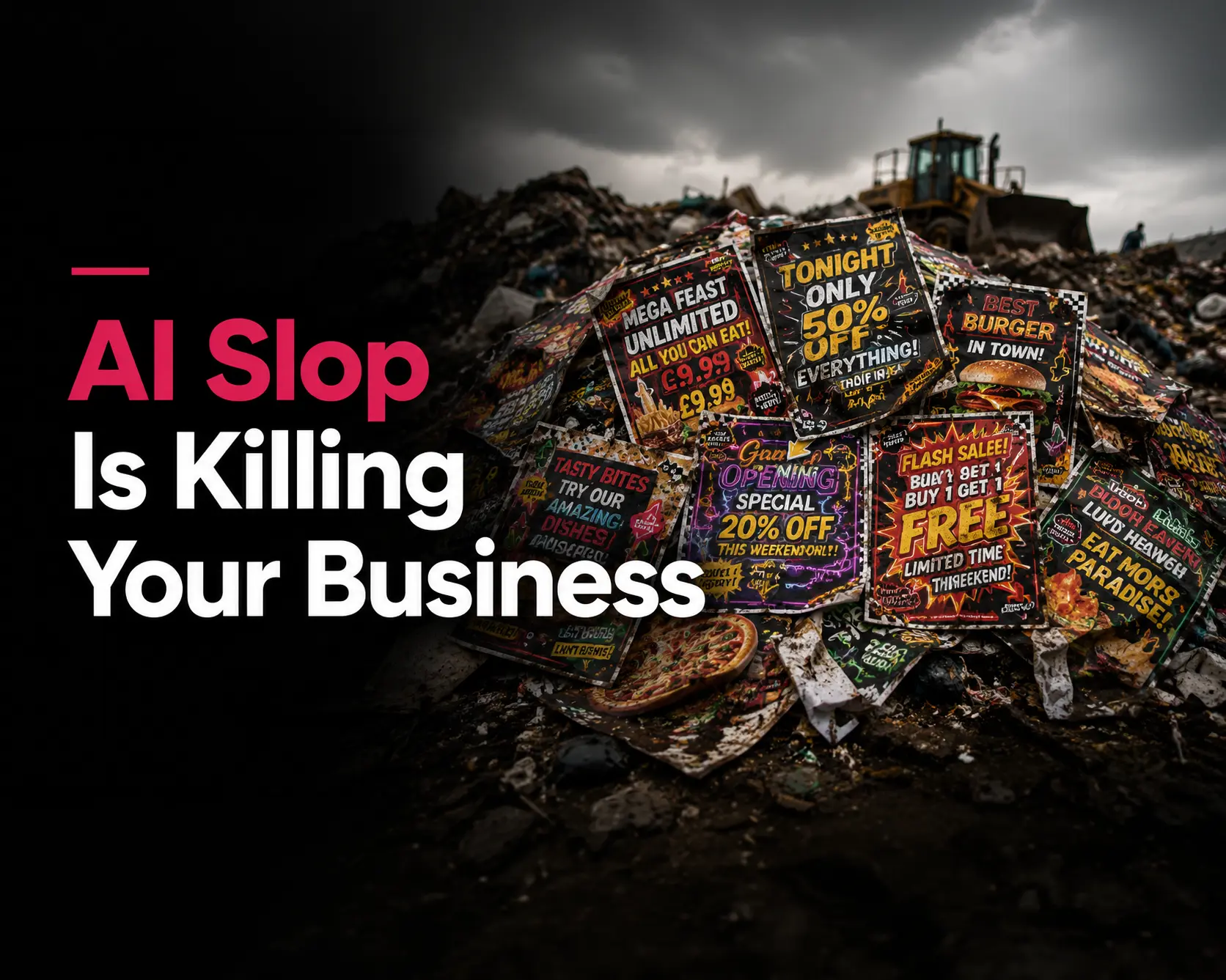

AI can create an advert in seconds. That does not mean it should create the finished graphic.
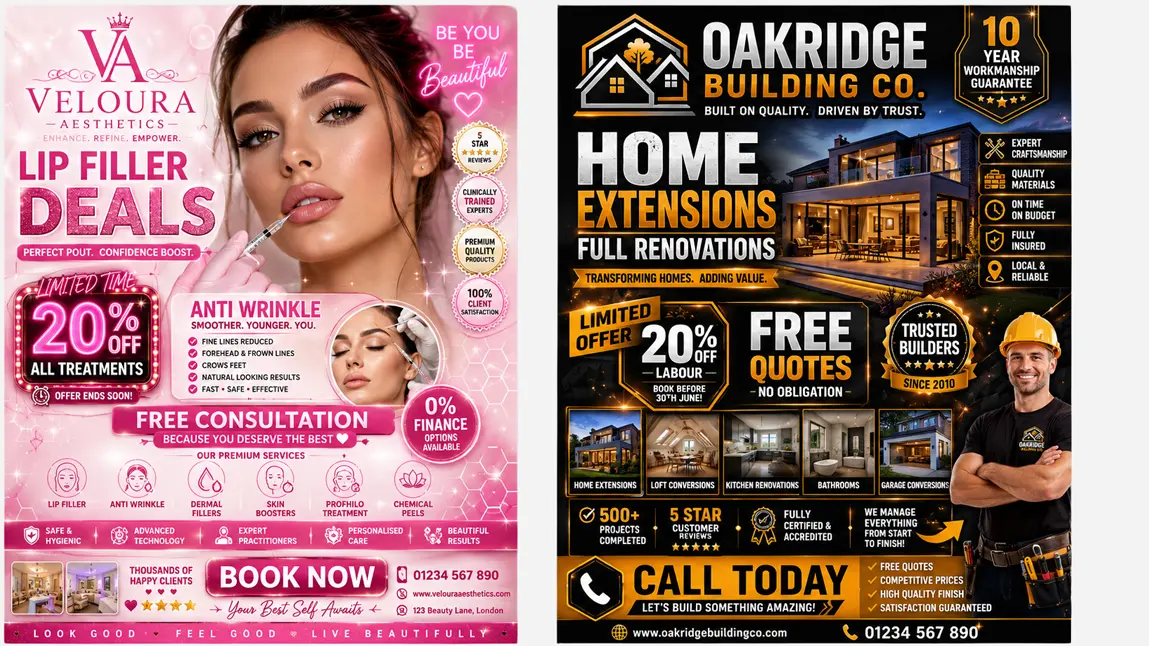
Across social media, the same strange patterns, glowing overlays, artificial images and crowded layouts are appearing everywhere. Restaurants, events, trades businesses and local services are starting to look as though they were designed by the same machine.
This is AI slop. Content that is quick to produce, easy to recognise and even easier to scroll past.
The graphic may save time, but it can make the business behind it look rushed, generic and difficult to trust.
Customers can see it
Poor AI graphics often follow the same formula. Generated imagery, oversized highlighted words, repeating patterns and far too much information fighting for space.
The design tries so hard to attract attention that the offer disappears.
Canva's 2026 research found that 70 per cent of consumers believe they can usually recognise AI generated advertising because something feels missing. It also found that 78 per cent would rather see adverts made by people, while 87 per cent believe the best advertising still requires a human touch.
Customers may not know which tool produced the graphic. They know when it looks generic, cluttered or disconnected from the business.
That matters when the advert is asking someone to book, enquire or spend money.
The offer should be obvious
An advert only has a few seconds to work.
The customer should understand what is being offered and what to do next. When the date, price or booking information is buried beneath effects, icons and several headline styles, the design has failed.
Nobody has booked a table because the poster had seven arrows.
Research from NielsenIQ found that AI generated adverts were often seen as more annoying, boring and confusing. Poor creative can also leave customers with a negative impression of the brand behind it.
This becomes even more expensive when the graphic is used in a paid advertising campaign. You are paying to show the work to more people, so the creative needs to earn attention.
What AI slop looks like
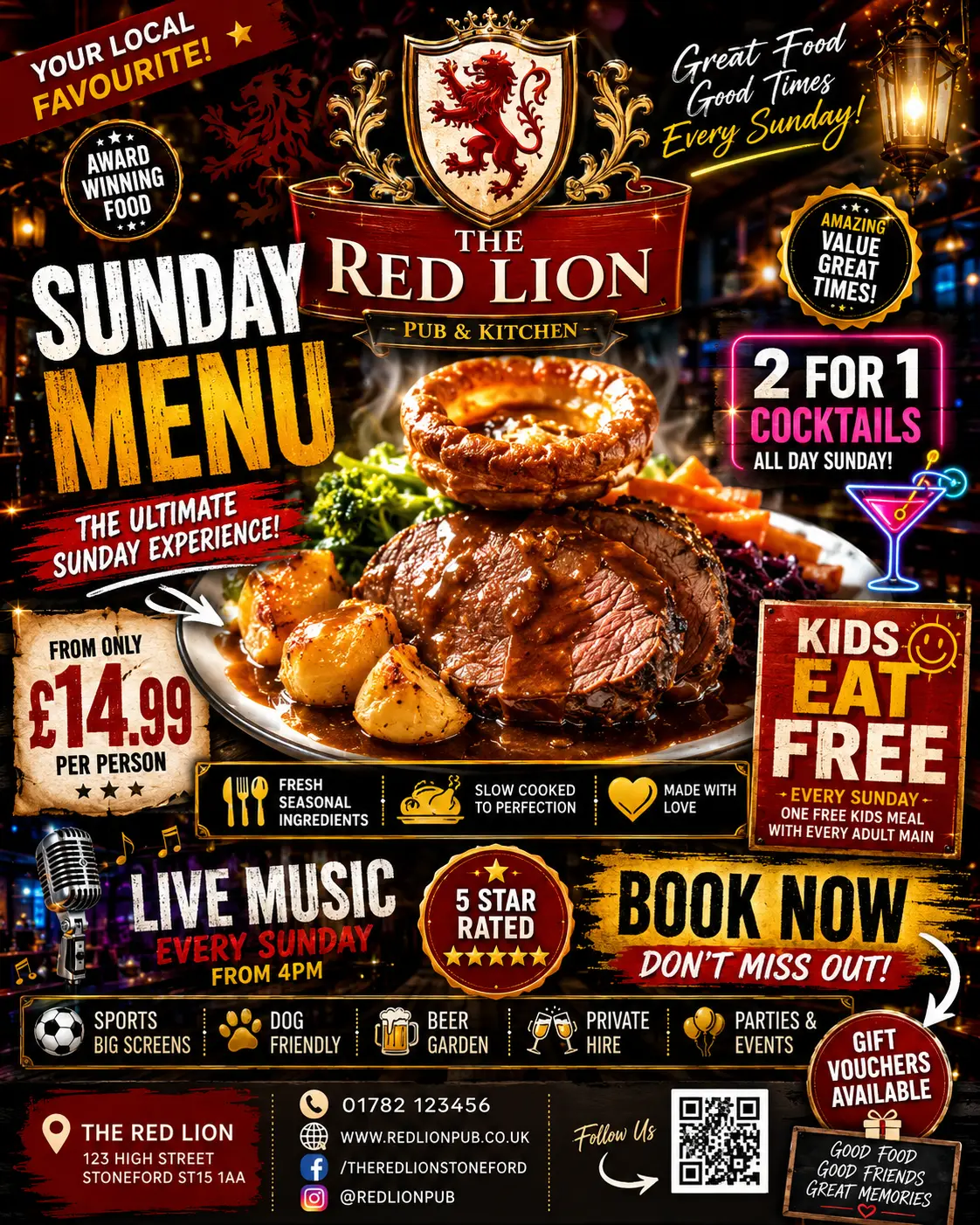
A restaurant promotes its Sunday menu using glossy generated food, repeating patterns and several competing offers. The booking details are buried, while the background looks nothing like the real venue.
One genuine photograph and a clear booking message would work much harder.
Our work with Sir Henry's takes the opposite approach. The creative is built around the real restaurant, its food and the atmosphere customers will experience. It does not invent a better version of the venue. It presents the real version properly.
Good advertising does not need to fill every gap. It needs to make the right information impossible to miss.
Do not use AI for the finished graphic
AI can support research, early ideas, copy and campaign planning. It can save time before the design begins, but it should not create the finished advert.
A generated graphic does not understand your brand identity, your audience or what the customer needs to see first. It can add more elements without making the message clearer.
Start with a proper layout and real content instead.
Canva and Adobe Express both offer professional templates that can be adapted using your own photography, colours, fonts and messaging. They provide structure and spacing while leaving room for the brand to shape the final design.
The template still needs to feel specific to the business. Otherwise, AI slop simply becomes template slop.
Real content gives customers proof
When customers need to see what they are buying, show them something real.
Use photographs of the actual food, venue, product, team, project or event. A professional content creation shoot gives customers something believable and gives the designer stronger material to work with.
The same approach guides our work with Pro Project Promotions, where real fighters, venues, charities and event footage shape the campaign.
Strong creative improves the real offer rather than generating a replacement for it.
Build templates you can reuse
Businesses often turn to generated graphics because they need content quickly. The better long term solution is a set of branded templates.
Create layouts for offers, events, testimonials, announcements and social posts. Keep the colours, fonts, spacing and calls to action consistent, then update the content when required.
This gives the business speed without sacrificing quality.
It also keeps your digital marketing connected across social media, advertising, email and the website.
Speed should not lower the standard
AI can support ideas, planning and production. It should not control the finished creative.
Use a Canva template. Start with an Adobe Express layout. Invest in genuine photography. Build reusable branded graphics. Or work with a creative team that can handle the process properly.
At Rubi, we combine branding, content creation, graphic design and paid advertising so the work looks right, communicates clearly and supports the wider campaign.
AI can save time. AI slop simply saves the customer the trouble of looking any further.
[
GET INFORMED
]
Our blog is a hub for insights, tips, and industry trends in digital marketing and social media.