[
BLOG
]
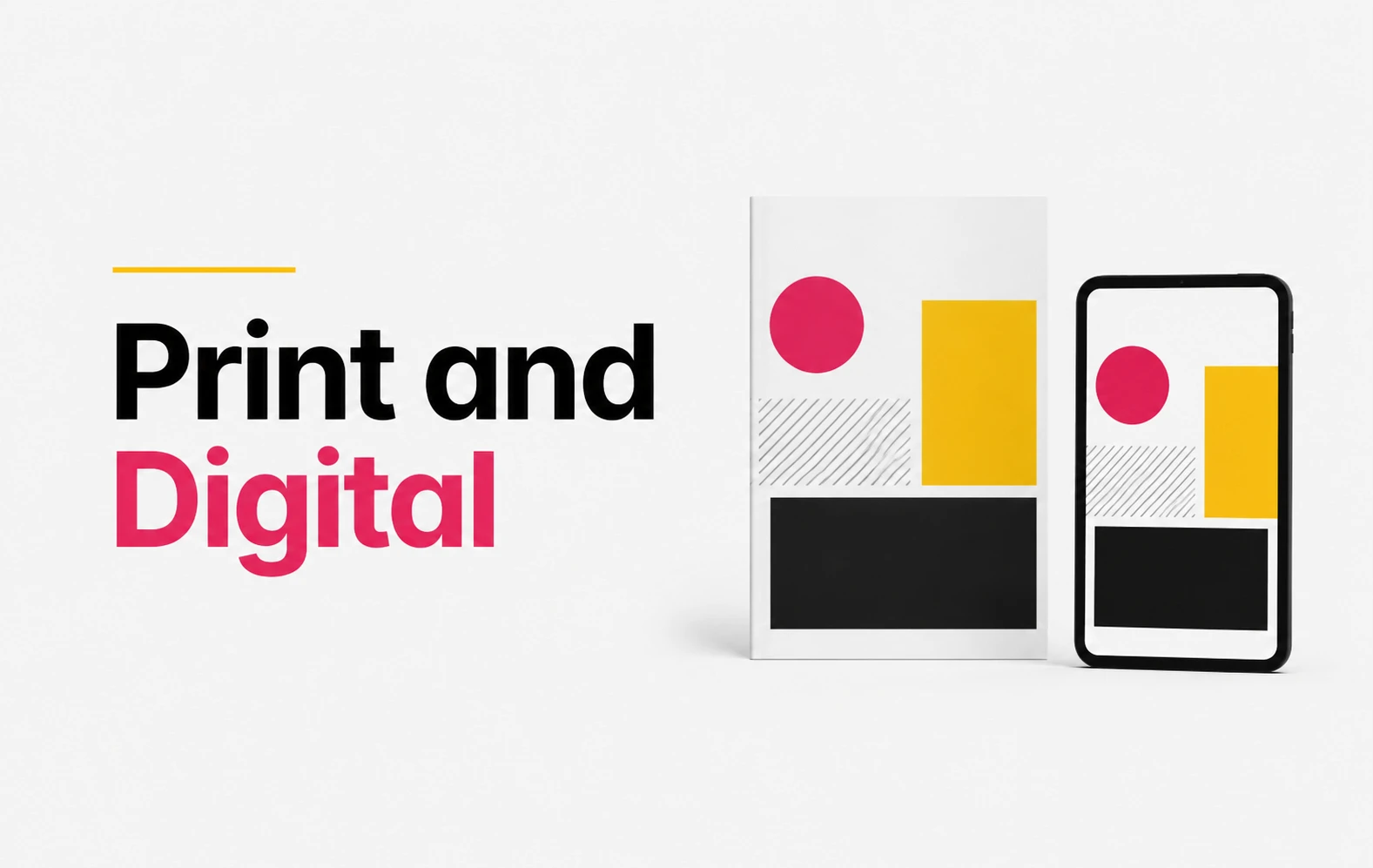

The assumption that print and digital marketing are in competition with each other is worth questioning. It is a framing that often leads businesses to abandon print entirely in favour of digital channels, not because digital is objectively superior for their specific context, but because the narrative around digital has been so dominant for so long that print feels like a step backward. The businesses that think more clearly about this tend to use both, deliberately, in ways that serve each other rather than competing for the same budget.
The useful detail here is that marketing works better when the channels support one clear commercial goal. The website, content, social activity, campaigns and reporting should not feel like separate jobs. That is how we approach our graphic design service, and it is visible in our work with Pro Project Promotions.
Print and digital are not interchangeable. They have genuinely different properties, different audience relationships, different attention profiles, and different roles in the customer journey. Understanding those differences clearly is what allows you to make informed decisions about where each belongs in your marketing mix, rather than defaulting to one because it feels more contemporary or more measurable.
What Print Does That Digital Cannot
Printed materials occupy physical space in a way that digital content cannot. A well produced brochure that is left in a waiting room, a letterhead that lands on a desk, a menu that sits on a restaurant table, these items exist in the environment of the person receiving them in a way that a digital ad or email does not. They are held, kept, shared in physical form. For businesses where the decision is considered and the relationship is long term, this physicality carries meaning.
Atlas Surveying is a good example of branding as a complete system. We built the logo, the colour palette, the typefaces and the stationery, and delivered brand guidelines that meant the identity could be applied consistently, whether it appeared on a site board, a letter head or their new website.
There is also an attention dynamic that is meaningfully different. People reading a printed document are, in most contexts, giving it more sustained attention than they give to digital content. The absence of competing tabs, notifications, and the infinite scroll means a well designed printed piece can take someone through a narrative or argument in a way that a website page, with its competing calls to action and exit opportunities, often cannot.
Print also signals investment. A business that produces high quality printed materials is communicating something about its own standards and permanence that a digital ad does not. This matters in sectors where the customer is making a significant financial commitment: professional services, property, luxury goods, events. The quality of the paper, the care in the typography, the completeness of the information all communicate that the business takes itself seriously, and by extension, will take the client seriously.
What Digital Does That Print Cannot
Digital marketing is measurable in a way that print fundamentally is not. You can see how many people saw an ad, clicked it, visited the page it pointed to, and completed a conversion action. You can test versions of creative against each other. You can adjust targeting in real time. You can reach people at the specific moment they are searching for what you offer. These capabilities are genuinely powerful and they are not available through print.
Digital is also scalable in a way print is not. Reaching an additional ten thousand people through digital channels does not require printing ten thousand additional brochures. The marginal cost of additional reach in digital advertising is low relative to print production costs. For businesses with tight budgets and a need to reach large audiences, this is a significant practical advantage.
The ability to update and iterate is also qualitatively different. A website can be changed instantly. A printed brochure cannot. For businesses in rapidly evolving sectors, or with frequently changing pricing or offerings, the flexibility of digital is practically important rather than merely convenient.
How They Work Together
The most effective use of print and digital together is to let each do what it does best at the appropriate moment in the customer relationship. Digital tends to be strongest at reach and discovery: getting in front of people who do not yet know you, capturing initial interest, driving traffic to a place where the relationship can develop. Print tends to be strongest at depth and conversion: providing something substantive to someone who is already interested, reinforcing the quality signals of a brand, providing reference material that a prospective customer can return to.
A business that runs digital advertising to generate interest, and follows up with a beautifully produced proposal or brochure for qualified prospects, is using both channels according to their strengths. A business that uses printed materials at events to capture attention and directs people to a digital follow up for more information is doing the same. The framing of these as complementary steps in a sequence, rather than competing budget lines, tends to produce better thinking about how to use each.
Neither channel is universally right. Neither is universally wrong. The question for any business is which combination, in what sequence, reaches the right people at the right moment with the right material. That question deserves a more nuanced answer than digital is better or print is dead.
If your marketing needs a clearer plan, start with our graphic design service and digital marketing service. Relevant examples include our work with Pro Project Promotions and Atlas Surveying.
[
GET INFORMED
]
Our blog is a hub for insights, tips, and industry trends in digital marketing and social media.